Congratulations to the 2025 Tree Cities of the World READ MORE

Growth Award: Recognising Progress Beyond the Five Standards
Recognizes cities that go beyond the five Tree Cities standards to strengthen their urban forestry programs.
July 1, 2026
Now in its seventh year, Tree Cities of the World is continuing to expand its global network while finding new ways to support cities as they develop stronger urban forestry programmes and celebrate their progress. To build on this momentum, the programme developed a pilot Growth Award: a new recognition opportunity designed to highlight cities that are taking meaningful steps beyond the five foundational standards. Run as a pilot during the 2025 recognition season, the Growth Award recognises new, recently completed, or significantly expanded activities that strengthen a city’s capacity to care for trees, invest in long-term planning, engage communities, and advance healthier, more resilient urban forests. Thanks to the success of the pilot, the Growth Award will be available to all cities to apply in the 2026 recognition season.
Celebrating the Cities That Helped Shape the Tree Cities of the World Growth Award
This year, Tree Cities of the World is proud to celebrate the cities that participated in the Growth Award pilot and helped shape a new pathway for recognising continued progress in urban forestry. Together, these pilot cities demonstrated the many ways Tree Cities of the World communities are going above and beyond the programme’s five foundational standards. Cities could apply for one or more Growth Awards connected to the five Tree Cities of the World standards: establishing responsibility, setting the rules, knowing what they have, allocating resources, and celebrating achievements. Their submissions highlighted new staff capacity, workforce development, updated policies, stronger data tools, increased investment, public tree-planting events, environmental education, and cultural recognition of trees. Across different governance systems, resource levels, and local contexts, the pilot cities showed that progress in urban forestry can take many forms and that each step forward is worth recognising.
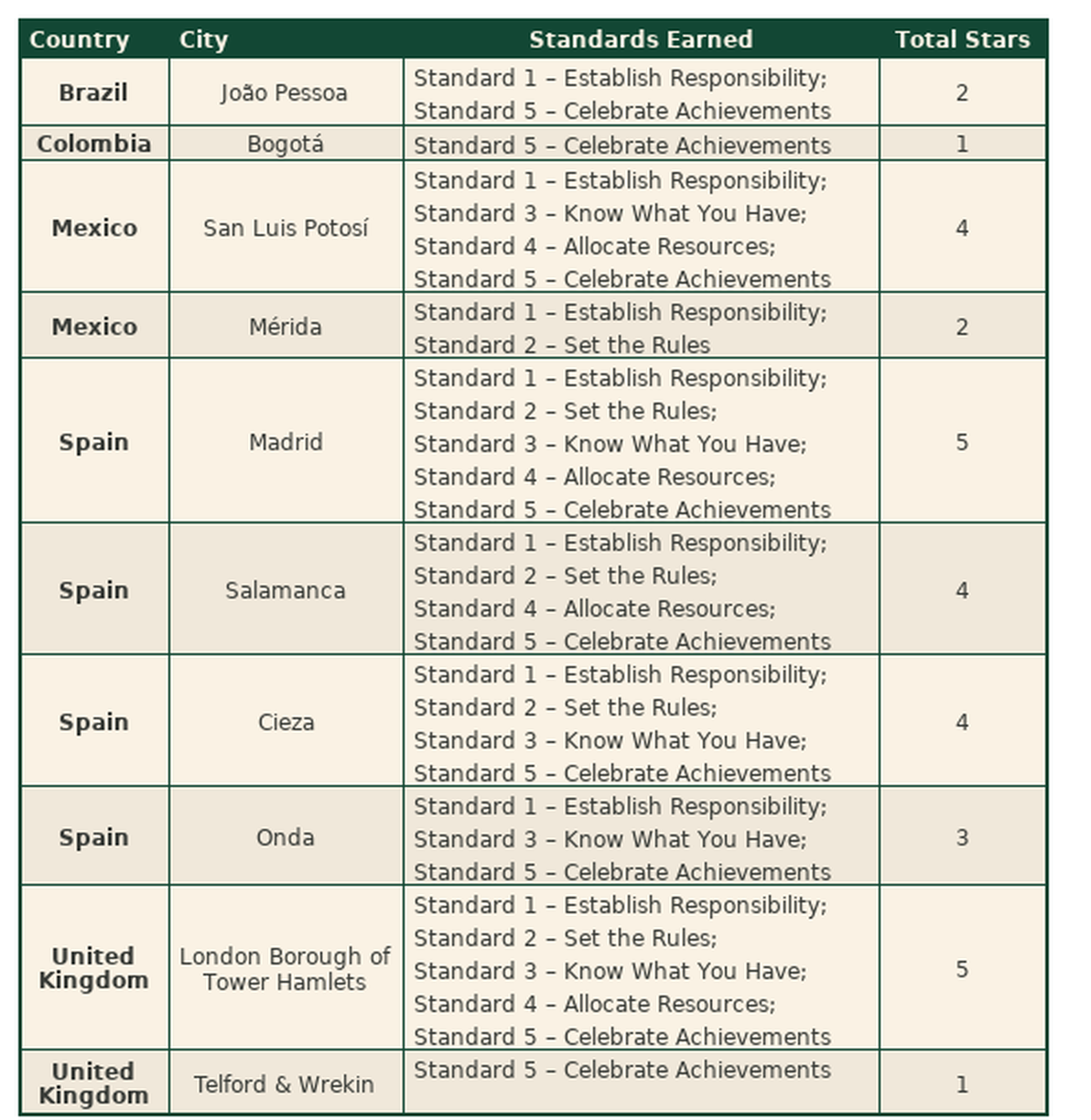
The pilot also demonstrated that the Growth Award can serve as more than a recognition mark. Cities described the award as a useful tool for setting goals, justifying continued investment, and building local support for urban forestry. Standard 1, Establish Responsibility, was the most commonly pursued area, while Standard 5, Celebrate Achievements, proved to be a globally relevant and accessible way for cities to showcase community engagement.
Building on what was learned through the pilot, the Tree Cities of the World Growth Award will officially launch during this year’s application season. The application will open on 8 September and will invite eligible Tree Cities of the World to share new, recently completed, or significantly expanded activities completed during the recognition year.
Congratulations to the pilot cities whose leadership, examples, and feedback helped create this opportunity for the wider network. Their accomplishments have helped open the door for more cities to be recognized for building greener, healthier, and more resilient communities.